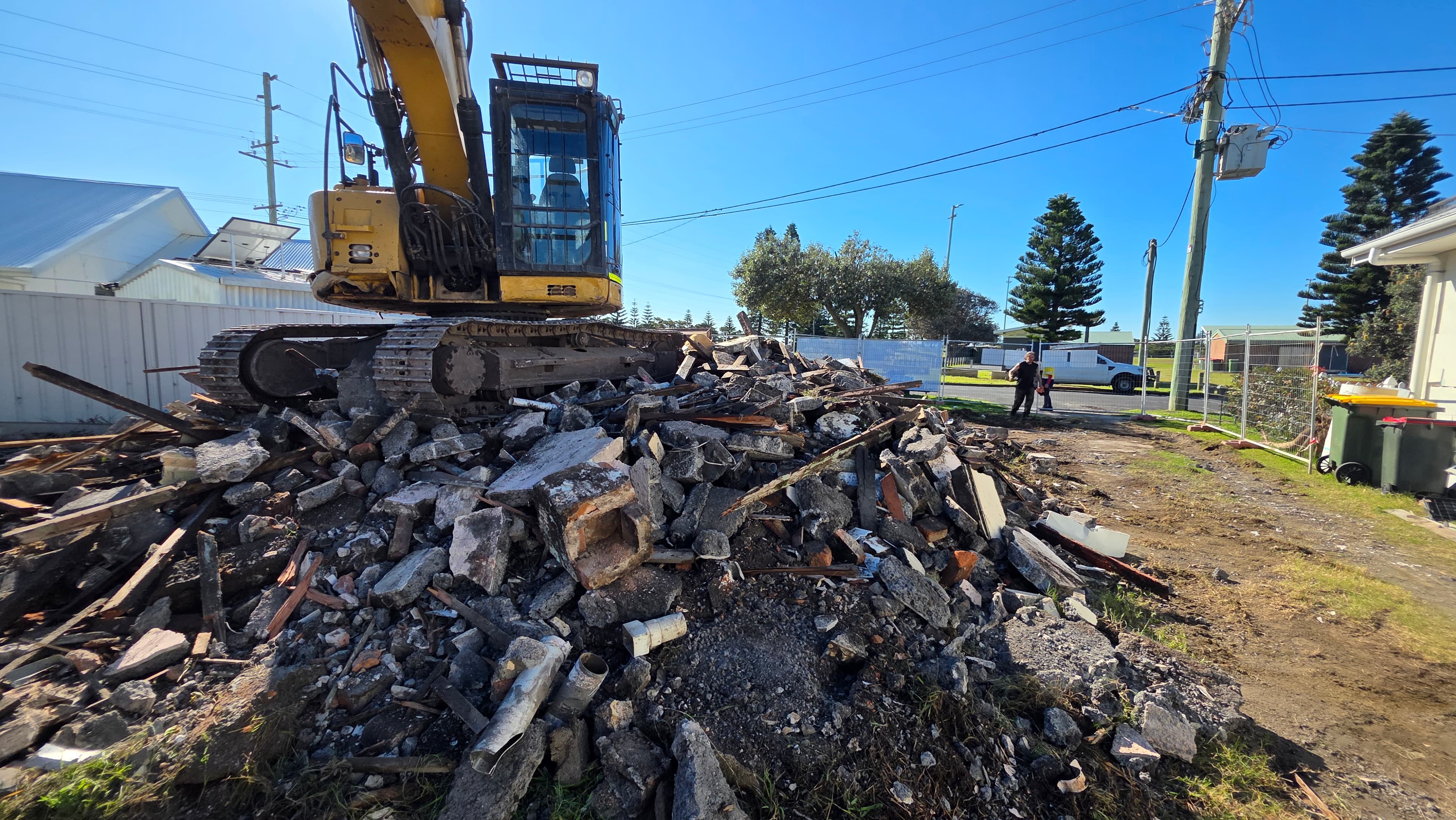
We carry out full or partial demolition and strip-outs after fire or flood damage. We use the property assessments and repair plans to identify what needs removing and any specialist work required first.
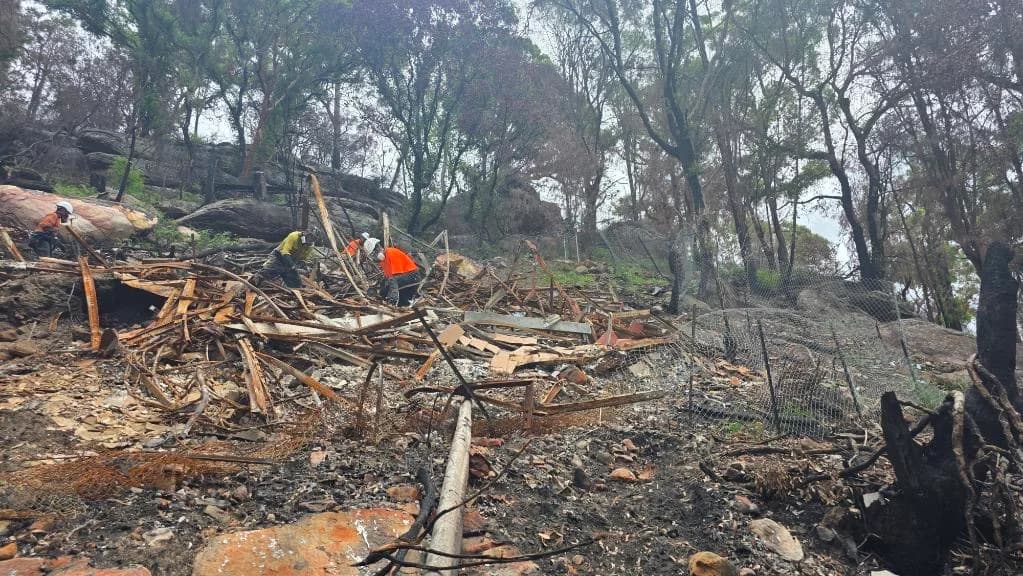
We helped clear the fire-affected hillside, working largely by hand and using machinery where access allowed. Steep ground and rocky steps shaped the removal work.
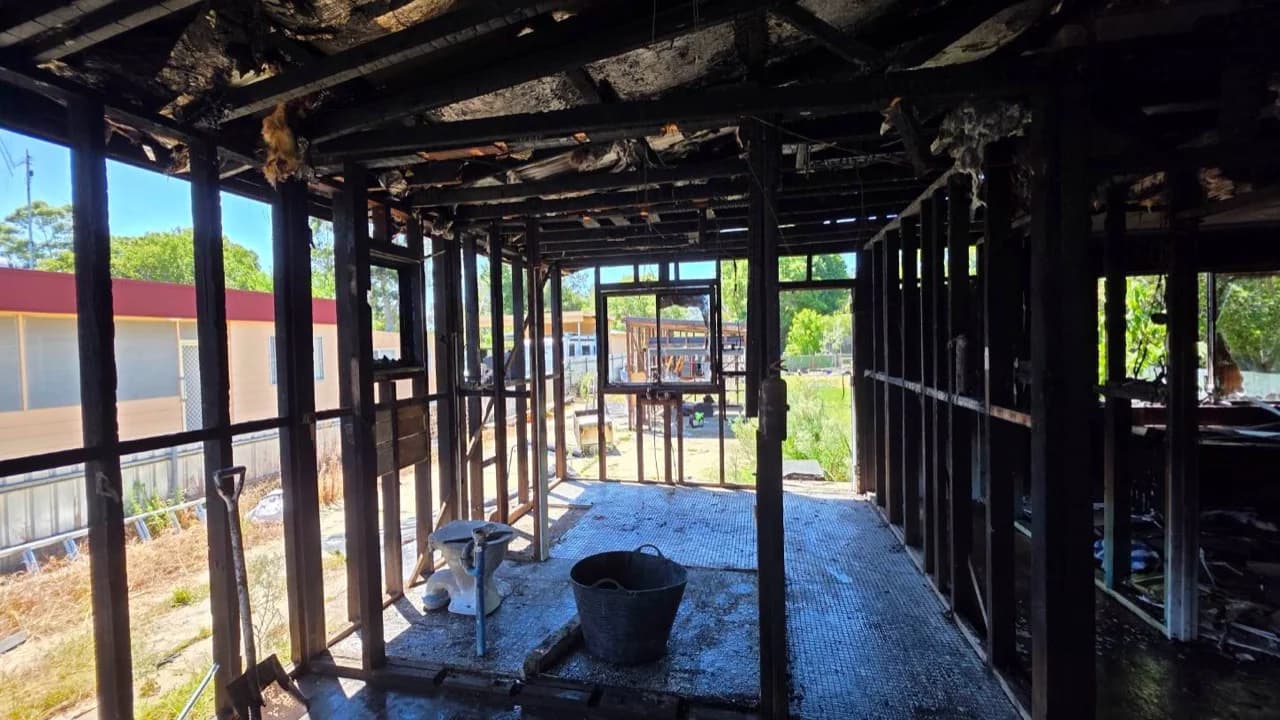
We removed interior material from this fire-damaged home. The project photographs show exposed framing, damaged timbers and the removal work beside the house.
Tell us what happened, which areas are affected and who has assessed the property. Share structural, asbestos or contamination reports already held by you or your project team.
Confirm who is directing the work
Identify the property owner and any appointed builder, assessor or project manager. Authorisation, removal boundaries and documentation should be clear before demolition is scheduled.
Define recovery and handover
Explain whether the aim is a cleared block, a stripped interior or a partial removal for repair. Identify retained belongings and structures, access restrictions and any specialist work that must happen first.
Resolve suspected asbestos before routine debris removal
For a damaged property, share existing asbestos information alongside the structural, insurer or repair reports. Use photographs already available. Do not enter a damaged building or disturb debris to obtain information for a quote.
Can you remove a damaged section instead of the whole building?
Partial demolition or a room strip-out may be appropriate once the retained structure and removal boundary have been assessed. Share the existing reports and repair plans so the scope can be discussed.
Do you handle insurance claims?
We can discuss demolition scope and project documentation with the people you authorise. Insurance coverage, claim decisions and insurer approval remain matters for you and your insurer.
What if asbestos or other contamination is involved?
Flag any known or suspected material in the first enquiry. Asbestos removal and remediation need to be coordinated with the demolition sequence and any specialist assessment or clearance requirements.